


Car Hire Tangier: The Complete Guide
Car Hire Tangier: The Complete Guide to Renting a Car in Morocco’s Northern Gateway
Tangier is where two continents face each other across fourteen kilometres of water. It’s also the perfect starting point for one of Morocco’s most underrated road trips — if you have the right car and the right information.
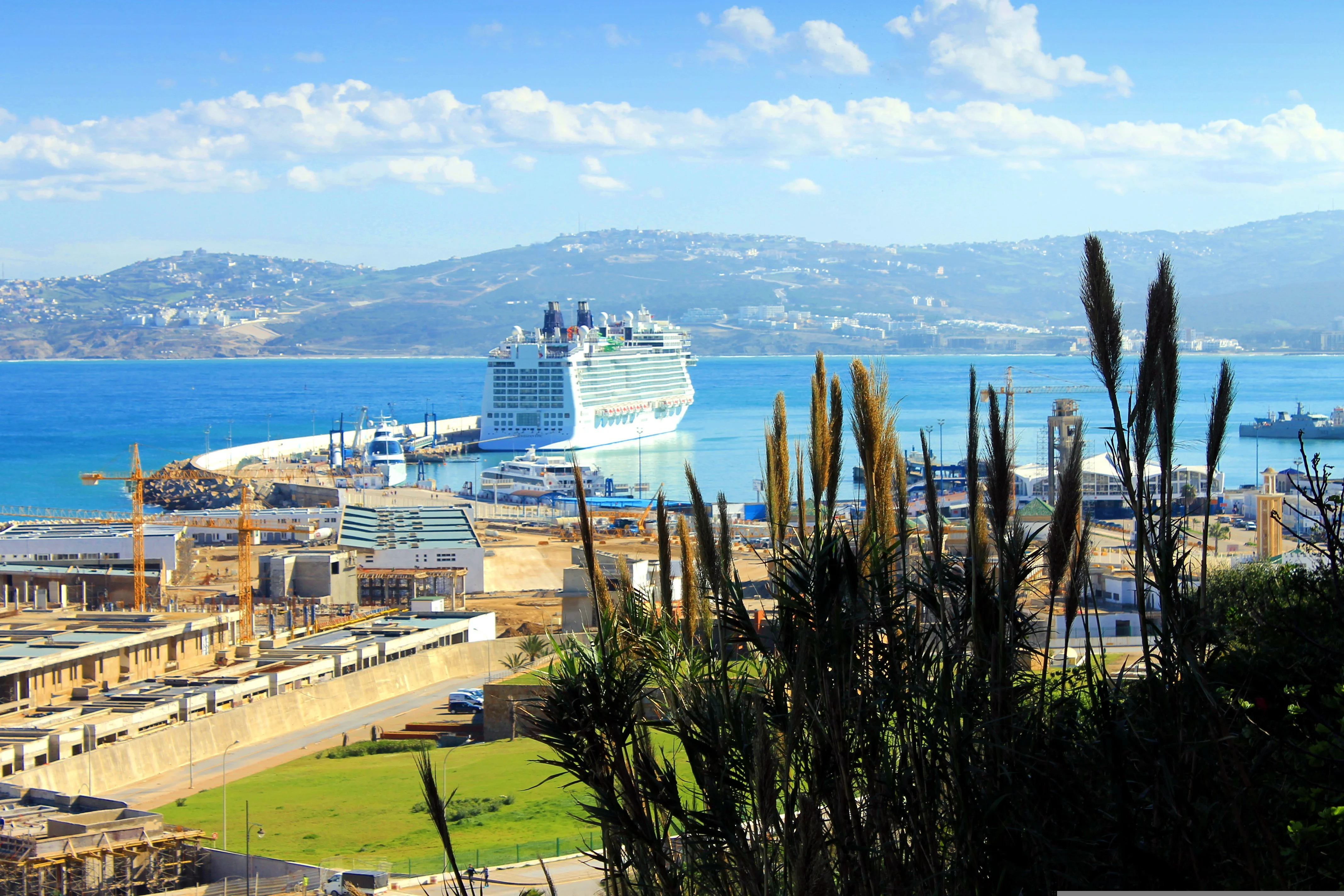
Stand at Cap Spartel, the northwestern tip of Africa, and look out at the point where the Atlantic meets the Mediterranean. On a clear day, Spain is visible across the strait — close enough that it feels less like a foreign country and more like a neighbour you can almost call across to. Tangier has always been this kind of place: a threshold city, a crossing point, somewhere between two worlds and fully belonging to neither. It’s also one of the most interesting cities in Morocco to explore by car.
Car hire Tangier opens up a corner of Morocco that most visitors skip entirely — the wild Atlantic coast of the Rif, the hilltop blue city of Chefchaouen, the ancient Roman ruins at Volubilis, and the agricultural heartland of the north that feeds much of the country. This guide covers everything you need to arrange your hire car in Tangier — whether you’re landing at the airport, collecting from downtown, or planning a one-way road trip south through the country. All of it, clearly and without the filler.
🌍 Why Tangier Is an Underrated Road Trip Base
Tangier has undergone a significant transformation in the past decade. The city that was once famous primarily for its literary expatriate history and its slightly edgy port atmosphere has reinvented itself — a new marina, a dramatically expanded port, a high-speed train link to Casablanca, and a growing number of travellers who come specifically for what the north offers rather than treating it as a transit stop.
The Rif Mountains
The dramatic limestone ranges of the Rif begin less than an hour from Tangier. Home to Chefchaouen — Morocco’s most photographed city.
Two Coastlines
Atlantic beaches to the west, Mediterranean coves to the east. Both accessible within 30–45 minutes of central Tangier.
Morocco’s Best Motorway
The A1 south connects Tangier to Rabat in under 3 hours and Casablanca in under 4 — on some of the country’s best road infrastructure.
For visitors arriving by ferry from Spain — a common and enjoyable crossing from Tarifa or Algeciras — car hire in Tangiers Morocco is particularly relevant. Many travellers bring a European vehicle on the ferry, but this involves significant cost, insurance complications, and the challenge of returning the car. A Moroccan hire car picked up in Tangier is often a cleaner, cheaper, and more flexible arrangement that lets you explore the country without worrying about mileage restrictions on a European contract.
✈️ Car Hire at Tangier Airport — What to Expect
Tangier Ibn Battouta Airport (IATA: TNG) sits approximately 15 kilometres southwest of the city centre, serving direct flights from across Europe — particularly France, Spain, Belgium, the Netherlands, and the UK — as well as domestic connections to Casablanca and other Moroccan cities. For visitors flying directly into northern Morocco, car hire Tangier airport is the most straightforward way to start moving immediately.
The Airport Layout
Tangier’s airport is compact and easy to navigate. After clearing passport control and collecting luggage, follow the “Location de Voitures” signs in the arrivals hall. Car hire desks from major operators — including local Moroccan companies with better rates and more flexible arrangements than many international chains — are located in or immediately adjacent to arrivals. The process for pre-booked customers typically takes 15–20 minutes from desk to driving away.
From the Airport to the City
The airport connects to central Tangier via the Route de l’Aéroport and the ring road system. GPS navigation works reliably throughout the area. In normal traffic, you’ll reach the city centre in around 20–25 minutes. The route passes through the developing southern suburbs of the city before the familiar medina and port area comes into view — a useful orientation for first-time visitors.
Pre-Book — Especially in Summer
Northern Morocco draws significant summer visitors, particularly from the Moroccan diaspora in France, Belgium, and Spain returning for holidays. From June through August, car hire Tangier airport demand peaks sharply — walk-up availability for specific vehicle categories becomes unreliable and walk-up rates are consistently higher than pre-booked prices. Securing your reservation in advance is the one decision that most reliably saves both money and stress.
🏙️ Car Hire in Tangier Downtown
Not every visitor to Tangier arrives by air. Many cross by ferry from Spain, arrive by train from Casablanca or Rabat, or are already in the city and want to add a hire car partway through their trip. In each of these cases, car hire Tangier downtown is the practical option.
City-Centre Collection
Several hire companies operate from the city centre, typically around the Boulevard Mohammed V and the Ville Nouvelle neighbourhood. For Huren Cars, city-centre arrangements can be organised directly — contact the team via the contact page to confirm vehicle availability and collection logistics for your specific dates and location.
Ferry Port Arrivals
Tangier Med port — Morocco’s main ferry terminal, located around 40 kilometres east of the city — handles the majority of crossings from Spain. If you’re arriving by ferry at Tangier Med and want a hire car, the options are: arrange collection at the port itself (limited availability), take transport into the city and collect there, or pick up from the airport (which sits between Tangier Med and the city centre geographically). The most reliable arrangement is to pre-book and confirm the collection point with Huren Cars before your crossing.
Parking in Tangier City
The Ville Nouvelle — Tangier’s modern neighbourhood — is navigable and has organised parking throughout. The medina and the older Kasbah district involve the same narrow-street constraints you’d encounter in any Moroccan old city. Park on the medina perimeter and walk in. The area around the Grand Socco (the large square connecting old and new city) has parking nearby and makes a practical base for medina exploration on foot.
🚙 Choosing the Right Vehicle for Northern Morocco
Northern Morocco offers remarkable road variety — smooth motorways, winding Rif mountain roads, Atlantic coastal routes, and the occasional rough track approaching a remote beach. The right vehicle depends on where you’re actually planning to drive.
City Driving & Coastal Routes — Economy or Compact
For Tangier itself, the Mediterranean coast east toward Ceuta and Tetouan, and the Atlantic beaches west toward Asilah, a compact economy car is everything you need. Easy to park, affordable to run, and perfectly capable on these well-maintained roads. The Dacia Sandero, Renault Clio 5, or Hyundai i10 handle all of these routes without any compromise.
Chefchaouen & the Rif Mountains — Compact or Mid-Size
The road to Chefchaouen (N2/N13) climbs through the Rif mountains on a paved but winding route. A compact car handles it fine — the road isn’t technically demanding, just narrow in places and best driven without rushing. The MG3 or Changan Alsvin offer a good balance of comfort and manoeuvrability on these mountain approaches.
Fès, Meknès & the Imperial Cities — Mid-Size Sedan
If your Tangier hire is the starting point for a longer car hire Morocco Tangier road trip south through the imperial cities, a comfortable mid-size saloon is the right choice. The A1 motorway south is excellent, and a sedan offers better long-distance comfort than a compact hatchback over multiple hours.
Remote Rif Villages & Unmade Tracks — SUV
If deeper Rif exploration is on the agenda — rural villages beyond Chefchaouen, or tracks approaching more remote northern coast sections — an SUV’s ground clearance provides meaningful reassurance. Browse the full selection on the Huren Cars fleet page.
Groups & Families — 7-Seat Minivan
Northern Morocco is popular for family holiday road trips, particularly among the Moroccan diaspora. A 7-seat minivan keeps everyone together, handles luggage comfortably, and works out considerably cheaper per person than multiple vehicles or private transfers for a group of four or more.
💶 What Car Hire in Tangier Actually Costs
Pricing for car rental Morocco Tangier aligns broadly with the national market. Here’s a realistic 2026 overview across all vehicle categories, in both euros and Moroccan dirhams.
| Vehicle Category | Daily Rate (€) | Daily Rate (MAD) | Weekly Rate (€ approx.) |
|---|---|---|---|
| Economy / Mini | €19 – €33 | 205 – 355 MAD | €110 – €190 |
| Compact Hatchback | €28 – €46 | 300 – 495 MAD | €160 – €265 |
| Sedan / Saloon | €42 – €70 | 455 – 755 MAD | €240 – €400 |
| SUV / Crossover | €58 – €95 | 625 – 1,025 MAD | €330 – €545 |
| 7-Seat Minivan | €72 – €115 | 775 – 1,240 MAD | €410 – €655 |
| Luxury / Premium | €90 – €850+ | 970 – 9,200+ MAD | On request |
Key Cost Considerations for Tangier
- Always choose unlimited mileage — A Tangier–Chefchaouen–Fès–Rabat route easily covers 600+ kilometres. Per-km charges on a capped contract will exceed any daily rate saving within two days.
- Summer surcharges apply — June through August is peak season in northern Morocco. Book early and expect slightly higher rates than shoulder months.
- One-way fees for south-bound trips — Picking up in Tangier and dropping in Casablanca, Rabat, or Marrakech is popular and available. A relocation fee applies — confirm the exact amount before booking.
- Young driver surcharge — Under 25? Add approximately €5–10/day. Standard across Morocco.
- Motorway tolls — The A1 south from Tangier has toll booths at regular intervals. Carry dirhams.
- Insurance — choose CDW at minimum — The basic third-party liability included in all rates does not cover your vehicle. Collision damage waiver is essential.
🛣️ Driving in Tangier and Northern Morocco
Tangier is one of Morocco’s more manageable driving environments, particularly compared to Casablanca. The city layout is relatively logical, the roads in the Ville Nouvelle are wide, and the volume of traffic — while busy during rush hours — never reaches the density of the country’s commercial capital. For first-time Morocco drivers, Tangier makes a reasonable introduction to local road conditions.
City Traffic Reality
The area around the port, the Grand Socco, and the approaches to the medina get congested at peak hours (8–9:30am and 5:30–7:30pm on weekdays). The Boulevard Mohammed V and the coastal corniche flowing north to Cap Spartel are more open and pleasant to drive. Outside rush hours, Tangier moves well — particularly in the newer neighbourhoods to the south and west of the centre.
The Rules Worth Knowing
- Drive on the right. Speed limits: 60 km/h in town · 100 km/h on open roads · 120 km/h on motorways.
- Speed cameras operate on the A1 south and on major exit roads from Tangier. They are actively monitored.
- Police checkpoints are routine on all routes south and east from Tangier. Stop calmly, present documents, and you’ll be waved through in under two minutes.
- Roundabouts: circulating traffic has priority.
- Seatbelts mandatory for all passengers. No handsfree, no mobile phone use.
- The N2 road to Chefchaouen is mountain road — narrow in sections, winding throughout. Take it at a comfortable pace rather than trying to make time.
Northern Morocco vs Southern Morocco — What’s Different
Drivers moving from the south of Morocco to the north (or vice versa) notice a few differences. Northern roads — particularly the Rif mountain routes — tend to be narrower and wind more tightly than the Atlas approaches in the south. However, the motorway infrastructure in the north is excellent, particularly the A1 corridor from Tangier south through Rabat to Casablanca. Furthermore, northern Morocco receives significantly more rainfall than the south, which means mountain roads can be slippery in winter months (November–March) — factor this in if your trip overlaps with the rainy season.
🗺️ The Best Drives from Tangier
Northern Morocco is chronically underexplored by international visitors who tend to rush south toward the more famous destinations. That’s their loss — and your opportunity. With a car hire in Tangiers Morocco, these drives are all within reach.
🌊 Cap Spartel & Caves of Hercules — 30 Minutes West
The northwestern tip of Africa is a 30-minute drive from Tangier along a coastal road that ranks among Morocco’s most scenic short drives. Cap Spartel lighthouse sits at the exact point where Atlantic and Mediterranean waters merge. Below the cape, the Caves of Hercules — where the ocean has carved dramatic arched openings in the cliff face — are genuinely impressive and almost always quiet. A perfect morning drive before the day warms up.
🏖️ Asilah — 45 Minutes South
The whitewashed Atlantic port town of Asilah is one of Morocco’s most charming small cities. Its medina walls are covered in annual murals by international artists, the beaches north and south of town are excellent, and the pace is entirely unhurried. The coastal road south from Tangier to Asilah passes through dune country with Atlantic views — a drive worth taking slowly.
💙 Chefchaouen — 1 Hour 45 Minutes Southeast
The blue city in the Rif mountains is one of Morocco’s most photographed destinations — and deservedly so. The medina’s blue-washed streets, the mountain backdrop, and the extraordinary quality of light in the late afternoon make it visually unlike anywhere else in the country. The drive there on the N2 is itself rewarding — the Rif mountains emerge gradually as you leave the coastal plain, and the final approach to the city through cedar-forested valleys is spectacular. Stay overnight if you possibly can; the city in the early morning, before the day visitors arrive, is completely different.
🏛️ Tetouan — 40 Minutes East
Morocco’s second UNESCO-listed medina (after Fès) sits in a valley below the Rif foothills near the Mediterranean coast. Tetouan receives far fewer visitors than it deserves — its Andalusian-influenced architecture, Spanish colonial heritage, and atmospheric souqs make it a genuine highlight of northern Morocco. The drive east from Tangier on the N16 passes through some interesting transitional landscape between Atlantic and Mediterranean climate zones.
🌊 Mediterranean Coast — Martil, Cabo Negro, Al-Hoceima
The Mediterranean coast east of Tetouan conceals some of Morocco’s best beaches — rocky coves, clear water, and a fraction of the crowds that European Mediterranean resorts attract. Martil and Cabo Negro are accessible as day trips from Tangier. Al-Hoceima, further east, requires an overnight stay but rewards visitors with a national park, spectacular coastline, and a town that moves at its own unhurried pace.
🕌 Fès — 3 Hours South
Morocco’s spiritual capital and the country’s most complex medina is three hours south via the A1/A2 motorway. Pick up in Tangier and the drive to Fès becomes the opening chapter of a proper Moroccan road trip — imperial city to imperial city, with everything in between. See the Tangier guide and the Morocco travel guide for more itinerary ideas.
🏙️ Rabat & Casablanca — 3 to 4 Hours South
The A1 motorway from Tangier south is Morocco’s flagship road infrastructure — fast, smooth, and connecting the north directly to the capital and beyond. Many visitors pick up a hire car in Tangier and do a one-way trip south to Rabat or Casablanca, experiencing the country’s northern and central regions on a single journey. Confirm the one-way fee when booking. See the Rabat car rental guide for drop-off details.
📋 Documents and Practical Preparation
Getting paperwork right before your trip removes the one friction point that can delay or complicate a hire car pickup. Here’s exactly what to prepare for car hire Morocco Tangier:
- Valid driving licence — held for at least one year. Your home country licence is accepted at hire desks in Morocco.
- International Driving Permit (IDP) — strongly recommended for all nationalities; required if your licence is not in Latin script. Available from your national motoring association before departure. The IDP makes police checkpoint stops faster and eliminates any ambiguity about licence validity.
- Passport — required for the rental agreement and frequently requested at checkpoints, particularly in the north where the proximity to Ceuta and Melilla (Spanish territories) means more active border-area policing.
- Credit card in the main driver’s name — required for the security deposit hold. Debit cards are not accepted. The deposit (€200–€500 depending on vehicle) is blocked, not charged, and released after return.
- Booking confirmation — printed or clearly accessible on your phone.
- 24/7 helpline number — save it in your contacts at the desk before you drive away. Essential if anything goes wrong on a mountain road or at night.
⭐ Why Huren Cars for Your Tangier Hire
Searching for car hire Morocco Tangier returns a range of options. International chains, online aggregators, and local operators all compete for the same booking. The questions that separate them in practice: Is the pricing transparent? Is the vehicle what it claims to be? Is there genuinely someone available when something goes wrong on the road between Chefchaouen and Fès at 8pm?
Huren Cars — Moroccan Company, Moroccan Knowledge
Northern Morocco · Casablanca · Rabat · Marrakech · Transparent pricing · 24/7 helpline
Huren Cars operates across Morocco with a team that knows the country’s roads — northern Rif routes included — as a matter of daily practice rather than theoretical knowledge. The fleet spans from economy compacts through to premium vehicles, all maintained to a consistent standard. Pricing is presented in full at booking — no desk additions, no small-print surprises when you’re exhausted after a long flight or a long crossing from Spain.
Furthermore, the 24/7 helpline is staffed by people who know Morocco. When you call with a question from the road, you get a real answer from someone with local context — not a script being read in a different country. For longer itineraries covering multiple Moroccan cities, the ability to pick up in Tangier and drop off in Casablanca, Rabat, or Marrakech provides genuine flexibility. Visit the car listing page to check live availability for your dates, or read more at the About Huren Cars page.
❓ Frequently Asked Questions
Tangier Is a Beginning. The Road Decides the Rest.
There’s something fitting about starting a Moroccan journey in Tangier. It’s a city that has always been about transition — between continents, between cultures, between the familiar and the unknown. Standing at Cap Spartel with the Atlantic on one side and the Mediterranean on the other, the entire country spreads out behind you, waiting.
Car hire Tangier is the decision that makes all of that accessible — the blue streets of Chefchaouen, the Atlantic beaches south to Asilah, the ancient medinas of Fès and Meknès, and eventually, if the road takes you far enough, the Atlas mountains and the Sahara beyond. Huren Cars handles the logistics. The rest is Morocco — and Morocco, from behind the wheel, is remarkable.