


Car Rental Marrakech
Car Rental Marrakech: The Complete Guide to Hiring a Car in the Red City
Marrakech is magnificent on foot — but the real Morocco starts the moment you leave the medina walls. Here’s everything you need to rent a car in Marrakech and drive it well.
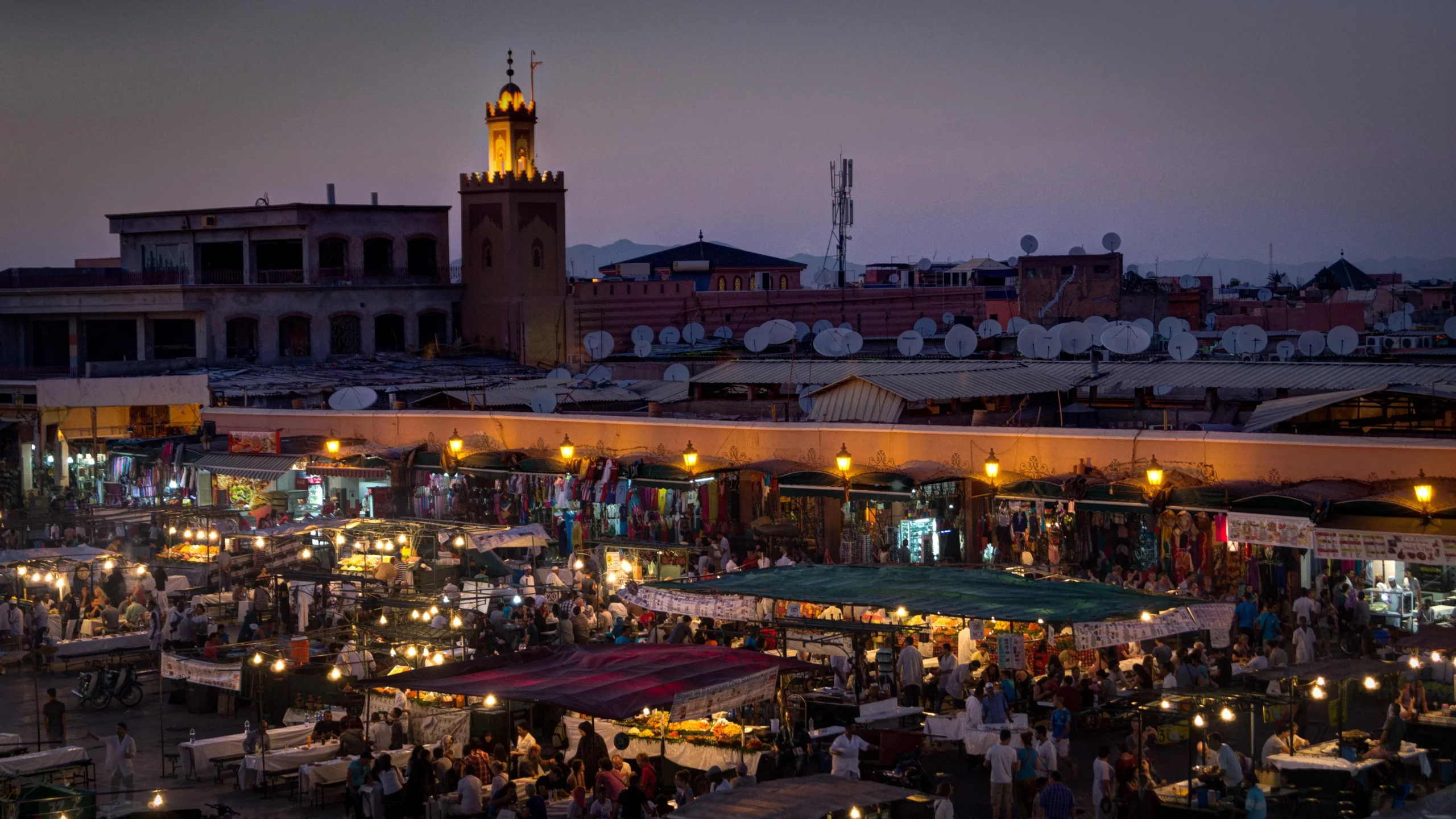
Marrakech hits you immediately — the smells, the colour, the noise of Jemaa el-Fna as the square shifts from daytime market to evening theatre. It’s one of those cities that doesn’t ease you in. It just happens, all at once, and you either go with it or you don’t. Most people go with it. And then, after a few days in the medina, they start to wonder what lies beyond the walls.
The answer, for anyone willing to pick up the keys and find out, is extraordinary. The Atlas Mountains begin less than an hour’s drive south. Ouarzazate and the edge of the Sahara are a morning away. The coastal town of Essaouira is two hours west along a road that runs through argan tree country. None of this is accessible by package tour without giving up your schedule to someone else’s. All of it is yours with a car rental Marrakech. This guide tells you exactly how to arrange that — intelligently, without overpaying, and without any of the surprises that catch people out at rental desks.
🗝️ Why Renting a Car in Marrakech Opens Up the Country
The medina of Marrakech is rightly one of the most visited places in Africa. But it’s also enclosed — a world unto itself — and it can start to feel like the only world available if you’re relying on taxis and tour buses to move around. The moment you have your own hire car, that changes entirely.
The Atlas Awaits
The High Atlas mountains begin less than an hour from the medina. Impossible to explore properly without your own vehicle.
Your Own Pace
Stop at the roadside argan cooperative. Linger at the mountain pass. Arrive at the desert camp before the tour groups. It’s your day.
Better Value
For families or small groups, a hire car beats the accumulated cost of private transfers and guided excursions for every destination.
Consider the economics of a day trip to the Atlas mountains by private transfer versus a hire car. The transfer costs are significant, the timing is someone else’s, and the stops are predetermined. A hire car Marrakech for the same day — including fuel — typically costs less per person for a group of three or more, and you leave when you want, stop where you like, and nobody is waiting to drive you back to a schedule.
There’s also a particular quality to arriving somewhere under your own steam. The Ait Benhaddou kasbah lands differently when you drove through the Draa valley to get there rather than arriving on a minibus from a hotel. The journey becomes part of the experience, not an obstacle to it.
✈️ Car Rental at Marrakech Airport (RAK) — Step by Step
Marrakech Menara Airport (IATA: RAK) is Morocco’s second busiest international gateway, handling direct flights from across Europe, the Middle East, and North Africa. For most international visitors, this is where the Marrakech adventure starts — and car rental Marrakech airport is the fastest way to begin it properly.
The Airport Pickup Process
After landing, clearing passport control, and collecting luggage, follow the signs for “Location de Voitures” (car rental). The hire car desks at RAK are located in the arrivals hall or immediately adjacent to it. With a pre-booked reservation, the handover process — documents verified, vehicle condition checked, keys issued — typically takes 15–20 minutes. From there, the airport exits directly toward the city centre (around 6 kilometres southwest) and the southern routes toward the Atlas.
Why Pre-Booking Matters at RAK
Marrakech is one of Morocco’s most visited cities, and car hire RAK demand is consistently high — particularly from March through October and during the busy Christmas and New Year period. Walk-up availability at airport desks exists, but specific vehicle categories — automatics, larger SUVs, 7-seat vans — regularly sell out during peak periods. Pre-booking your car rental Marrakech airport through Huren Cars secures your vehicle and almost always delivers a better daily rate than the desk price.
🏙️ Picking Up in Marrakech City — What to Know
Not every visitor needs an airport pickup. If you’ve arrived by train from Casablanca, or you’ve spent a few days in the medina and now want a car for the second half of your trip, city-centre collection is the practical option. Huren Cars can arrange delivery and pickup within Marrakech — contact the team via the contact page to confirm the logistics for your specific dates and location.
Parking in Marrakech — A Candid Assessment
Let’s be honest about this: parking inside or near the medina of Marrakech is not straightforward. The narrow derbs (alleys) of the old city were designed for donkeys, not Renaults. Most visitors with a hire car stay in a riad and arrange to park in one of the guarded car parks (parkings gardés) outside the medina walls — near Jemaa el-Fna or Bab Doukkala. These are inexpensive, attended, and far less stressful than attempting to park closer to the action.
The Guéliz district (the modern ville nouvelle) is considerably more car-friendly — wider streets, organised parking, and the kind of grid layout that GPS handles without drama. If your accommodation is in Guéliz or the Hivernage neighbourhood, a hire car in the city is perfectly manageable.
🚙 Choosing the Right Car for Marrakech and Beyond
This decision matters more in Marrakech than in almost any other Moroccan city, because the roads radiating out from Marrakech vary so dramatically. The motorway north to Casablanca is excellent. The N9 over the Tizi n’Tichka pass climbs to 2,260 metres with switchback bends and occasional rough sections. The pistes south of Zagora are a different world entirely. The car you choose should match your actual plans.
City Driving & Guéliz Errands — Economy Car
If you’re staying in Marrakech and using a car mainly for convenience — airport transfers, supermarket runs, occasional day trips on good roads — a compact economy car does the job without the unnecessary cost of a larger vehicle. The Dacia Sandero, Renault Clio 5, or Peugeot 208 are reliable, fuel-efficient, and easy to manoeuvre in tighter situations.
Atlas Day Trips & Ourika Valley — Compact or Mid-Size
The Ourika Valley road and the lower reaches of the Atlas are accessible on a good compact car. The road is paved, the scenery starts immediately, and a MG3 or Changan Alsvin handles these routes without complaint. For the Toubkal region and higher Atlas tracks, move up.
Tizi n’Tichka Pass & Ouarzazate — SUV Strongly Recommended
The Tizi n’Tichka — Morocco’s highest paved mountain pass at 2,260 metres — is a genuinely spectacular drive. It’s also one where an SUV’s ground clearance, engine power, and stability make a meaningful difference, particularly in winter or after rain. If your plans include Ouarzazate, Ait Benhaddou, or the Draa Valley, don’t compromise on vehicle choice. Browse available SUVs on the Huren Cars fleet page.
Sahara Edges & Desert Pistes — 4×4 Only
If the plan extends to Zagora, Merzouga, or any tracks approaching the actual Sahara, a 4×4 with high ground clearance isn’t optional — it’s the only sensible choice. Attempting desert tracks in a standard saloon car is how hire agreements end badly. Discuss your specific route with the Huren Cars team when booking and they’ll advise on the most suitable vehicle.
The Casablanca–Marrakech Run — Any Category
The motorway connecting Casablanca and Marrakech (A7/A1) is one of Morocco’s best roads — fast, smooth, and well-signposted for the full 240-kilometre run. Any vehicle in the fleet handles this route comfortably. If you’re doing a one-way trip — picking up at Casablanca airport and dropping in Marrakech — confirm the one-way fee when booking.
💶 What Car Rental in Marrakech Actually Costs
Pricing for rent car Morocco Marrakech follows the national market broadly, with some seasonal variation given Marrakech’s popularity. Here’s a realistic 2026 overview across categories, in both euros and Moroccan dirhams.
| Vehicle Category | Daily Rate (€) | Daily Rate (MAD) | Weekly Rate (€ approx.) |
|---|---|---|---|
| Economy / Mini | €20 – €34 | 215 – 365 MAD | €115 – €195 |
| Compact Hatchback | €30 – €48 | 325 – 520 MAD | €170 – €275 |
| Sedan / Saloon | €44 – €72 | 475 – 775 MAD | €250 – €410 |
| SUV / Crossover | €62 – €98 | 670 – 1,055 MAD | €350 – €560 |
| 7-Seat Minivan | €75 – €120 | 810 – 1,290 MAD | €425 – €680 |
| Luxury / Premium | €95 – €850+ | 1,025 – 9,200+ MAD | On request |
Charges Worth Knowing About in Advance
- Young driver surcharge — Under 25? Add €5–10/day. Standard across all Moroccan hire companies.
- Additional driver — Must be registered on the contract. Unregistered drivers void your insurance — a risk not worth taking on mountain roads.
- One-way fee — Dropping in Casablanca, Rabat, or another city carries a relocation charge. Confirm the exact amount before booking.
- Unlimited mileage — Non-negotiable for any Marrakech road trip. A Marrakech–Ouarzazate–Marrakech return alone is 400+ kilometres.
- Fuel policy — Always verify full-to-full. Fill the tank before return; keep the receipt as proof.
- Motorway tolls — Apply on the A7/A1 toward Casablanca. Carry dirhams or confirm toll tag availability.
- Security deposit — Blocked on your credit card at pickup, typically €200–€500. Released after vehicle return and inspection.
🛣️ Driving in and Around Marrakech — The Honest Truth
Marrakech has a reputation for chaotic driving, and that reputation isn’t entirely unearned. But it’s also not the full picture. The city rewards drivers who understand its rhythm — and once you do, it becomes manageable rather than intimidating.
Inside the City
The medina itself is largely inaccessible by car — which is actually a relief. The surrounding avenues, particularly the ring road around the medina walls (Avenue Mohammed V, Avenue El Mouahidine) and the routes through Guéliz, follow a logic that GPS navigates reliably. The main challenge is the volume of motorcycles and motorbikes, which move through gaps that don’t look like gaps. Give them space. They know exactly what they’re doing.
Jemaa el-Fna Area
Driving near Jemaa el-Fna during the evening — when the square is at full intensity — is best avoided. The pedestrian overflow, the horse-drawn carriages (caleches), the taxis, the motorcycles, and the tour buses converge into something that takes patience. If you can park and walk for the evening, park and walk.
Essential Rules
- Drive on the right. Speed limits: 60 km/h in town · 100 km/h on open roads · 120 km/h on motorways.
- Speed cameras operate on exit roads from Marrakech — particularly the N9 south and the A7 north. Respect the posted limits.
- Police checkpoints are common on roads leading to popular tourist destinations. Have documents accessible and stay calm — these are routine.
- On mountain roads, use your horn on blind bends. This is standard practice in Morocco and expected by other drivers.
- Do not drive on unmarked pistes without confirming your rental agreement permits it. Many standard hire contracts exclude off-road use.
- Seatbelts mandatory for all passengers. Handsfree required for phone use while driving.
🌍 Seven Unforgettable Drives from Marrakech
Marrakech’s position in central Morocco makes it the best-placed city in the country for road trip variety. Within a day’s drive in almost any direction, the landscape transforms dramatically.
🌿 Ourika Valley — 1 Hour South
The closest Atlas escape from the city. A river valley lined with Berber villages, local restaurants built over the stream, and the Setti Fatma waterfalls at the valley’s end. Paved road the entire way, accessible in any hire car, and beautiful enough to justify the short drive without any further plans. A perfect half-day from Marrakech.
🏔️ Toubkal National Park — 1.5 Hours South
Africa’s highest peak (4,167m) is the centrepiece of this national park, but you don’t need to summit it to make the drive worthwhile. The town of Imlil at the park entrance sits at 1,740 metres — the air is noticeably cooler, the views back toward the plains are striking, and the drive through the Mizane valley to get there is exceptional. An SUV is recommended for the last stretch.
🏛️ Ait Benhaddou & Ouarzazate — 3.5 Hours via Tizi n’Tichka
Drive the Tizi n’Tichka mountain pass, descend into the pre-Saharan landscape, and arrive at the ksar of Ait Benhaddou — a UNESCO World Heritage Site and one of the most filmed locations on earth (Gladiator, Game of Thrones, Lawrence of Arabia). Ouarzazate, the nearby “Hollywood of Morocco,” has its own Atlas Studios worth visiting. This is a full day or, better yet, an overnight trip. SUV strongly recommended.
🌊 Essaouira — 2.5 Hours West
The walled coastal city of Essaouira is a completely different Morocco from Marrakech — blue-and-white medina streets, Atlantic wind, fresh seafood, and a pace that feels almost Mediterranean. The drive west through argan tree country is genuinely lovely. Essaouira is achievable as a day trip from Marrakech, though spending the night there gives you the city in the quieter morning hours before the day trippers arrive.
🏖️ Agadir — 2.5 Hours Southwest
Morocco’s main beach resort city sits on a wide Atlantic bay with reliable sunshine and a well-developed coastal infrastructure. The drive south on the A7 passes through the Anti-Atlas foothills and argan forest. For families looking to combine Marrakech with a few beach days, driving to Agadir rather than paying for transfers makes strong financial sense. See our Agadir driving guide for local tips.
🌵 Zagora & Draa Valley — 5 Hours South
Push further south past Ouarzazate and you enter the Draa Valley — 200 kilometres of date palm oases, ancient ksour (fortified villages), and the gradual shift from mountain to desert. Zagora sits at the edge of the erg (sand sea). This is a proper road trip requiring at minimum one overnight stop, an SUV, and a sense of genuine adventure. One of Morocco’s great drives.
🏙️ Casablanca — 3 Hours North
The motorway between Marrakech and Casablanca (A7/A1) is Morocco’s busiest and most developed road. Fast, smooth, and well-serviced. If your trip involves both cities, driving between them is far more comfortable than the train and gives you total flexibility on timing. Many travellers flying out of Casablanca at the end of a Moroccan road trip use this route as their final drive. Our Casablanca car rental guide has full details on pickup and drop-off options at the other end.
📋 What to Bring to the Rental Desk
Arriving at the hire car Marrakech desk with everything ready turns a 20-minute process into a 10-minute one. Here’s the complete list:
- Valid driving licence — Held for at least one year. Your home-country licence is accepted at the desk.
- International Driving Permit (IDP) — Strongly recommended for all nationalities; effectively required if your licence is not in Latin script. Available from national motoring associations before departure.
- Passport — Required for the rental agreement and commonly requested at police checkpoints. Keep it in the vehicle throughout your rental.
- Credit card in the main driver’s name — Required for the security deposit hold. Most Moroccan hire companies do not accept debit cards for deposit purposes.
- Booking confirmation — Printed or clearly accessible on your phone. Also note the 24/7 helpline number and save it in your contacts before you drive away.
- Vehicle condition check — Walk the full exterior before accepting the car. Photograph every existing mark with a timestamp. This step takes five minutes and protects you from any dispute at return.
⭐ Why Huren Cars for Your Marrakech Rental
Marrakech has no shortage of car hire options. International chains with glossy websites and local operators with competitive headline rates both compete for the same booking. The difference shows up not at the booking stage but on the day you actually need the car — and on any day during the rental when something unexpected happens.
Huren Cars — Morocco-Based, Morocco-Experienced
Marrakech · Casablanca · Rabat · Modern fleet · Honest pricing · 24/7 helpline
Huren Cars is a Moroccan company operating across the country — not a franchise of a global brand run from a call centre in another time zone. That means the team advising you on vehicle choice for a Tizi n’Tichka crossing has driven that road. The person who answers the helpline when you have a question near Ouarzazate knows where you are and what the roads are like in that area.
The fleet is maintained to a consistent standard, insurance options are presented clearly before you sign anything, and the price quoted at booking is the price you pay. For the practical question of what’s available for your Marrakech dates, the Marrakech car rental page and the full fleet listing show live availability. The About Huren Cars page has more background on the company if you’d like it.
❓ Frequently Asked Questions
The Red City Is the Starting Line, Not the Destination
Marrakech deserves every day you give it. But for many travellers who’ve experienced it, the most vivid memories of Morocco aren’t from the souqs or the riads — they’re from the road. The moment the Atlas mountains appear on the horizon. The silence when you turn off the engine somewhere above 2,000 metres. The light over Ait Benhaddou in the late afternoon. The smell of the Atlantic coming through the window as you arrive in Essaouira.
None of that happens without a car rental Marrakech that works — a good vehicle, an honest company, and the confidence that if anything goes wrong on the road, someone is available to sort it. That’s what Huren Cars is for. Check what’s available for your dates, book with confidence, and let Morocco do the rest.