


Marrakech To Merzouga Drive
Marrakech to Merzouga Desert Road Trip: Route, Stops, and Car Rental Tips
Cross the High Atlas, pass through Ait Benhaddou, and arrive at the Sahara’s edge — everything you need to drive this legendary route with confidence.
Few drives anywhere in the world compress this much landscape into a single route. Within roughly nine hours of driving — spread comfortably across two days — the Marrakech to Merzouga drive takes you from the red medina walls of Marrakech, over Morocco’s highest mountain pass, through a UNESCO World Heritage kasbah, along a valley of eroded rock formations, and finally out to the edge of the Sahara itself, where the dunes of Erg Chebbi rise gold against the sky.
It’s one of Morocco’s genuine bucket-list journeys, and it’s entirely achievable as a self-drive trip. This guide walks through the exact route, honest road conditions, why driving yourself beats a packed tour bus, which vehicle actually suits this terrain, and the practical safety details that make the difference between a smooth trip and a stressful one.
🗺️ The Route: Marrakech to Merzouga Step by Step
The classic route covers roughly 560 kilometres and is almost always split across two days, with an overnight stop around Ouarzazate or the Dades Valley. Here’s the sequence, in order.
Marrakech → Tizi n’Tichka Pass (2 hours)
Leave Marrakech on the N9 heading south. Within an hour, the road begins climbing into the High Atlas. The Tizi n’Tichka pass crests at 2,260 metres — Morocco’s highest paved mountain road, and one of its most spectacular drives.
Ait Benhaddou (add 30 minutes off the main road)
A short detour brings you to the UNESCO-listed ksar of Ait Benhaddou — one of the most filmed locations on Earth (Gladiator, Game of Thrones, Lawrence of Arabia). Worth an hour’s stop to walk through the fortified earthen village.
Ouarzazate (30 minutes past Ait Benhaddou)
Known as Morocco’s “Hollywood,” home to the Atlas Film Studios. A natural lunch stop and, for many travellers, the first night’s accommodation before continuing east the next day.
Dades Valley (roughly 2 hours from Ouarzazate)
The road east from Ouarzazate follows a valley of dramatic rock formations and Berber kasbahs. The Dades Gorge itself, with its famous switchback road, is a worthwhile side trip if you have the time.
Todra Gorge (optional detour, 45 minutes)
Sheer red rock walls rising nearly 300 metres above a narrow canyon floor. A short but unforgettable stop if your schedule allows the detour.
Erfoud → Merzouga (final 2–3 hours)
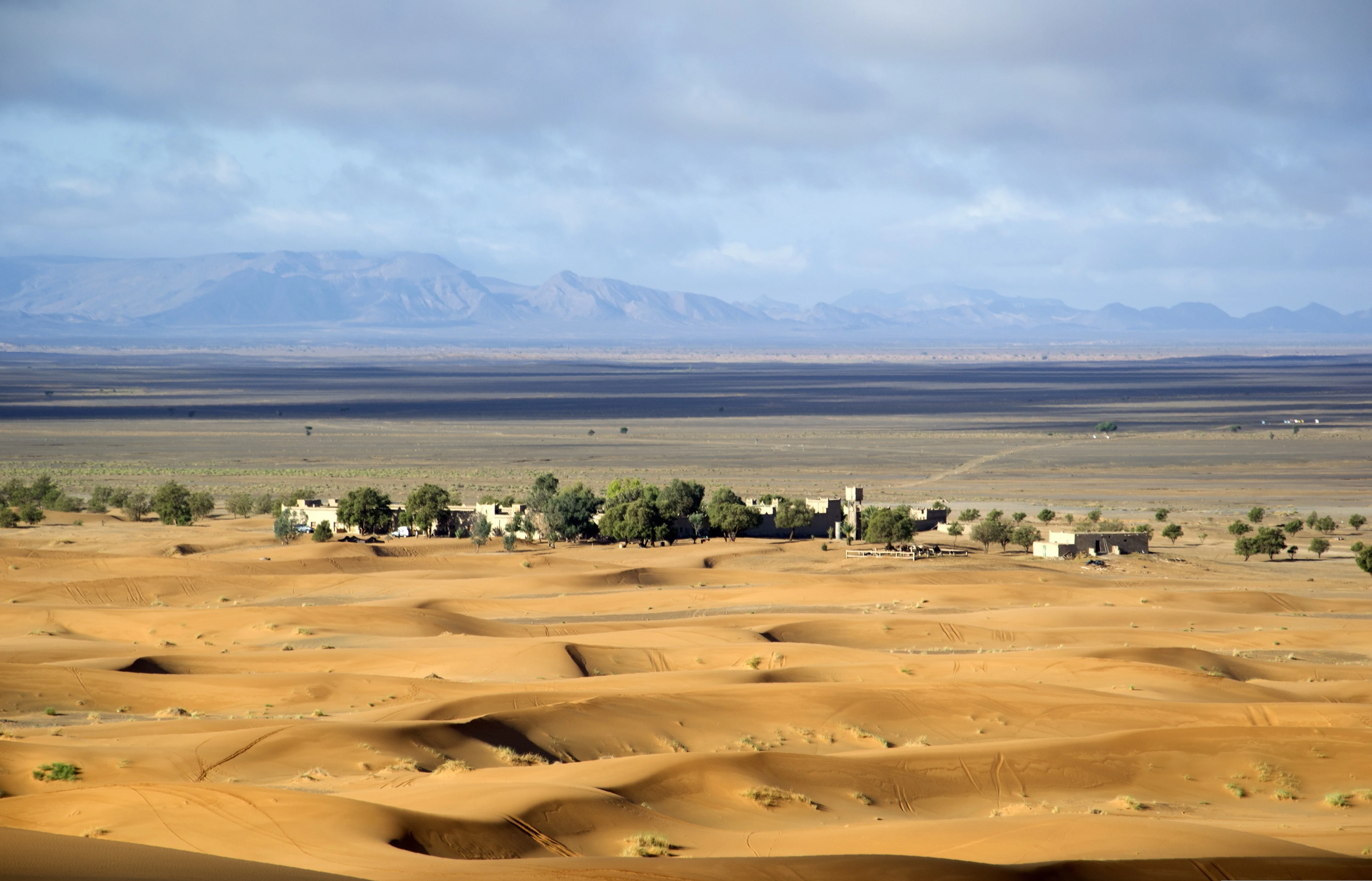
The road continues east through the Ziz Valley’s palm groves before the landscape opens into flat pre-desert plains. The dunes of Erg Chebbi appear on the horizon well before you actually reach Merzouga — a genuinely thrilling first sighting.
🛣️ Road Conditions: What to Actually Expect
The honest answer to “what are the Marrakech to Merzouga road conditions like?” is reassuring: the entire route is on paved, maintained national roads (the N9 and N10). There is no off-roading, no gravel tracks, and no technical driving required to complete this journey in a standard rental vehicle.
That said, “paved and maintained” doesn’t mean identical to a European motorway. The road narrows in mountain sections, bends are frequent and occasionally tight, and slower-moving vehicles — lorries, tourist coaches, the occasional herd of goats crossing — are a normal part of the driving experience. None of this makes the route dangerous. It does mean a comfortable, capable vehicle makes a genuine difference to how enjoyable the drive feels.
Where the Road Demands More Attention
- Tizi n’Tichka pass — Tight switchbacks, significant elevation change, and occasional slow lorries climbing at their own pace.
- Dades Gorge road — Narrow with dramatic drop-offs if you take the optional switchback detour.
- Night driving anywhere on this route — Unlit roads, occasional livestock, and reduced visibility make after-dark driving considerably harder than the same stretch in daylight.
This is precisely why a comfortable SUV or a reliable, well-maintained sedan is genuinely important for this route — not because the roads are bad, but because the terrain rewards a vehicle with confident handling, adequate power for sustained climbs, and enough ground clearance to take the mountain bends without hesitation.
🚐 Why Self-Driving Beats a Tour Bus for This Route
Organised tour buses run this exact route daily, and they’re a reasonable option for travellers who prefer not to drive. But the trade-offs are significant, and most people who’ve done both agree that a morocco desert road trip by self-drive is a considerably richer experience.
Stop for the Views
The Tizi n’Tichka pass offers viewpoints that demand a photo stop. On a bus, you watch them pass through the window. Driving yourself, you simply pull over.
Set Your Own Pace
Want an extra hour at Ait Benhaddou, or to skip the crowds and linger later? A tour bus has a fixed schedule. Your rental car doesn’t.
Avoid the Crowds
Tour buses arrive at the same stops at the same times, in large groups. Self-driving lets you time your visits to avoid the busiest moments.
There’s also a subtler advantage. A bus itinerary moves through this landscape as a checklist of predetermined stops. A self-drive journey moves through it as a continuous, unfolding experience — the gradual shift from Marrakech’s red earth to the Atlas peaks, the sudden drop into the pre-Saharan plains, the first glimpse of dunes on the horizon. That sense of gradual transformation is genuinely part of what makes this route special, and it’s largely lost when you’re one of forty people on a coach following a fixed schedule.
🚙 Which Car to Choose: SUVs vs Sedans
For anyone considering renting an SUV in Marrakech specifically for this trip, the short answer is: it’s the right call, though not strictly the only option. Here’s the honest comparison.
| Vehicle Type | Best For | Considerations |
|---|---|---|
| SUV / Crossover | Recommended for this route — mountain confidence, ground clearance, comfort on long stretches | Slightly higher daily rate, but worth it for the Tizi n’Tichka crossing |
| Sedan / Saloon | A capable, well-maintained sedan handles the paved route reliably | Less ground clearance and cornering confidence than an SUV on mountain bends |
| Compact Hatchback | Workable but not ideal — underpowered on sustained mountain climbs | Best avoided for this specific route if a better category is available |
| 4×4 | Not required for the paved route — reserve this for actual desert dune excursions arranged locally in Merzouga | Higher cost with no real benefit on this specific paved journey |
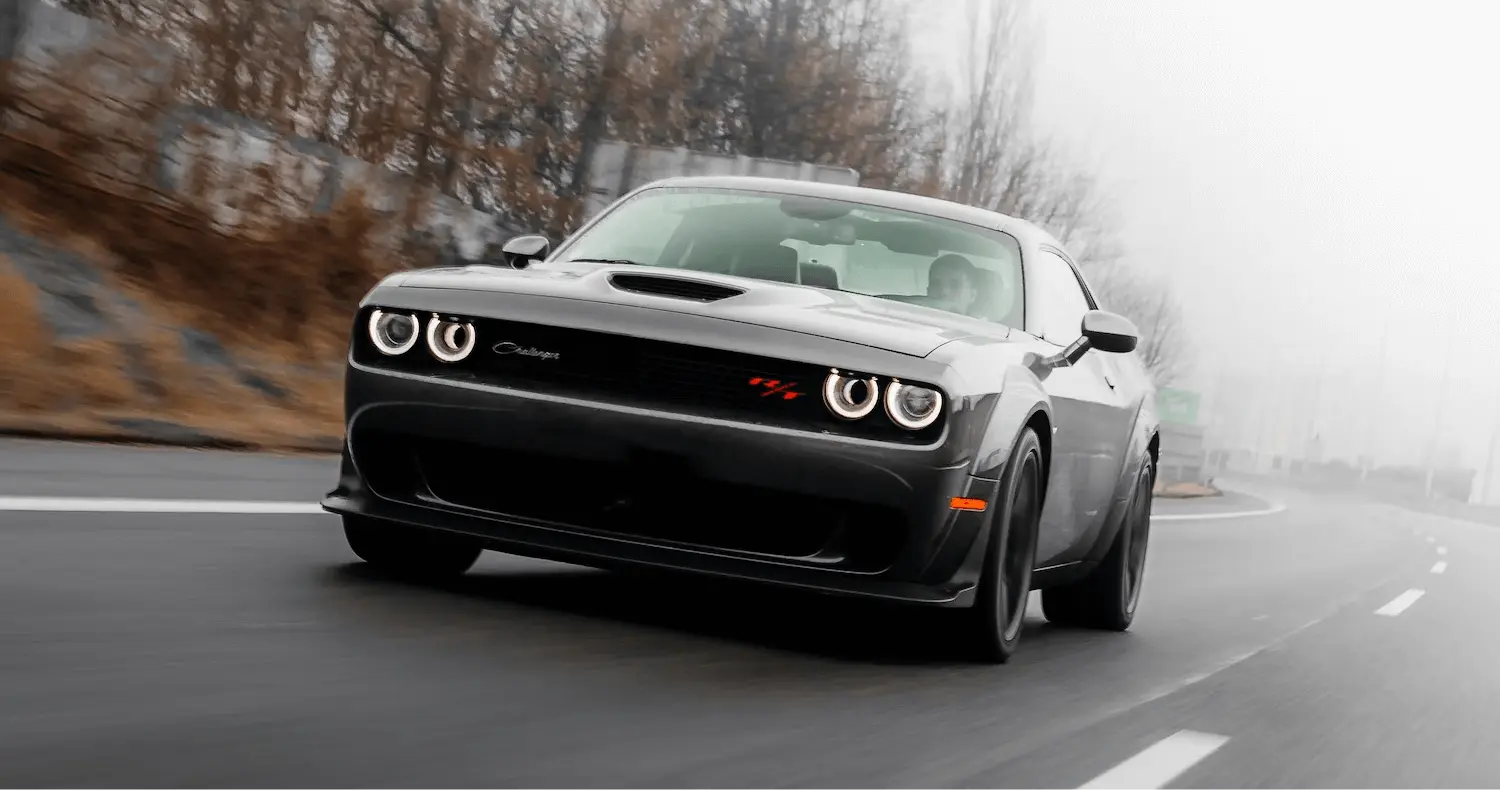
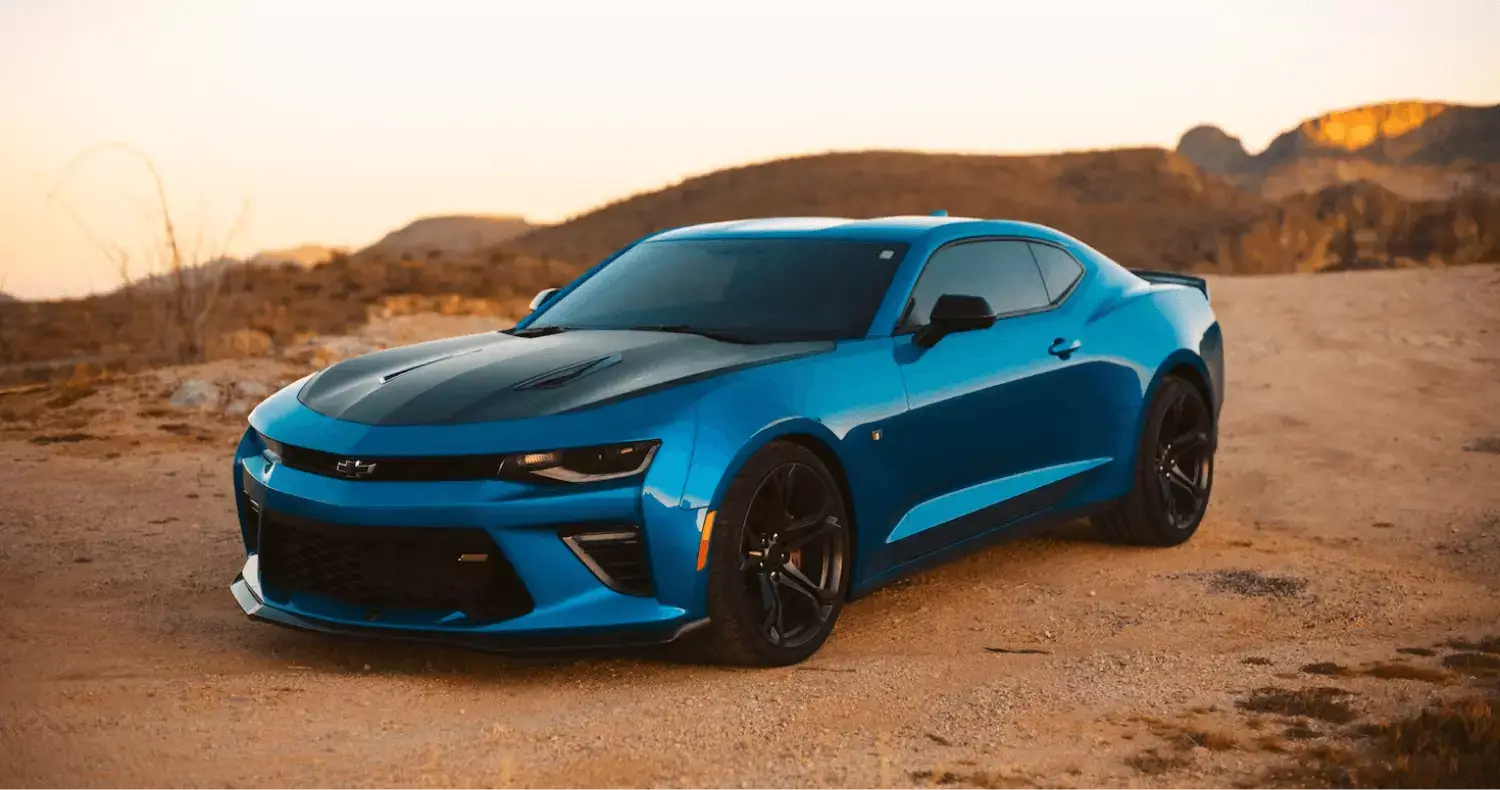
The Huren Cars fleet includes SUV and crossover options well-suited to this exact route — enough power for sustained mountain climbs, comfortable seating for the longer stretches through the Dades Valley, and the reassurance of higher ground clearance on the tighter mountain bends. If budget is the priority, a well-maintained sedan will complete the journey without issue — just expect a slightly less relaxed feel through the Tizi n’Tichka switchbacks.
⚠️ Safety & Driving Tips for the Journey
Navigating the Mountain Passes
- Use your horn on blind bends — standard, expected practice on mountain roads throughout Morocco.
- Keep a generous following distance; slower lorries and tour coaches are common on the climb.
- Stop only at designated viewpoints, not on the road itself, however tempting the view.
- Descend in a lower gear where possible rather than relying solely on brakes on long downhill stretches.
Refuelling Along the Route
Fill your tank before leaving Marrakech, and again in Ouarzazate — the two most reliable refuelling points on this route. Stations become noticeably sparser between Ouarzazate and Merzouga, particularly along the final stretch through the Ziz Valley. Don’t let your gauge drop below a quarter tank without a clear plan for the next station.
Weather Considerations
- Winter (December–February) — The Tizi n’Tichka pass occasionally experiences snow or ice at altitude. Check conditions before departing in these months; closures are rare but do happen after heavy snowfall.
- Summer (June–August) — Temperatures near Merzouga regularly exceed 40°C. Carry extra water, avoid driving in the hottest midday hours if possible, and keep an eye on your vehicle’s temperature gauge on long climbs.
- Spring & Autumn — Generally the most comfortable months for this drive, with mild temperatures throughout the route.
Documents & Preparation
- Valid driving licence and, ideally, an International Driving Permit.
- Passport and rental agreement kept in the vehicle — police checkpoints along this route are routine.
- The Huren Cars 24/7 helpline number saved in your phone before you leave Marrakech.
- Confirm your insurance covers the full route, including CDW for peace of mind on unfamiliar mountain roads.
⭐ Booking with Huren Cars in Marrakech
A route this rewarding deserves a rental experience that doesn’t complicate it. Marrakech airport car hire through Huren Cars means your journey to the Sahara starts the moment you land — not after a delayed transfer or a confusing city-centre pickup.
Huren Cars — Ready for the Desert Route
RAK airport pickup · SUVs & sedans · Transparent insurance · 24/7 helpline
Every insurance option is explained clearly at booking — no small print sprung on you at the desk. Choosing full coverage before a mountain-and-desert route like this one is a genuinely sensible decision, and the Huren Cars team can walk you through exactly what’s covered before you sign anything. Pick up your vehicle at Marrakech Menara Airport, and you’re on the road to the Atlas within the hour.
❓ Frequently Asked Questions
The Sahara Is Closer Than It Looks
The Marrakech to Merzouga drive is the kind of journey that stays with people long after the trip ends — not because of any single moment, but because of the accumulation of them. The mountain pass. The kasbah. The valley of eroded towers. The first sight of dunes catching the evening light. None of it requires anything more complicated than a good car, a full tank, and the decision to drive yourself.
Huren Cars makes the first part simple — a reliable vehicle waiting at Marrakech airport, honest insurance, and support along the way if you need it. The road, and everything it reveals between the Atlas and the Sahara, is entirely yours.