


Morocco 10 day itinerary
The Ultimate 10-Day Morocco Road Trip Itinerary
From the Atlantic coast to the dunes of the Sahara — a complete self-drive route through Morocco’s imperial cities, the blue city of Chefchaouen, and the desert beyond.
Ten days is, by most measures, the ideal length for a first proper Morocco road trip. It’s enough time to genuinely feel the country’s scale — from the Atlantic breeze in Rabat to the total silence of the Sahara at night — without turning the journey into a exhausting sprint between checkboxes. This Morocco 10 day itinerary covers four regions that, together, capture what makes Morocco one of the most rewarding self-drive destinations in the world: the administrative capital, the ancient imperial cities, the blue-washed mountain town of Chefchaouen, the dramatic gorges and dunes of the pre-Sahara, and finally the red city of Marrakech.
Every leg of this route is built around one central idea: self drive Morocco gives you access to places that simply don’t appear on any bus timetable. This guide walks through the full ten days, day by day, along with the practical driving knowledge and car rental logistics that make the whole loop work smoothly from the moment you land to the moment you hand back the keys.
🚗 Why Self Drive Morocco Instead of Public Transport
Morocco’s train network, run by ONCF, is genuinely good — comfortable, punctual, and connecting the major northern and central cities efficiently. Buses (CTM and Supratours) extend that reach further. However, neither option gets you to the places that define a trip like this one.
Todra Gorge
No train or bus reaches the canyon floor. The towering red rock walls are accessible only by road — and only rewarding if you can linger.
Chefchaouen
Reachable by bus, but only on fixed schedules that force you to rush the blue medina or miss the golden late-afternoon light entirely.
Merzouga Dunes
The desert camps beyond Merzouga are hours from the nearest train station. A hire car is the only practical way to arrive on your own schedule.
Furthermore, a fixed public transport schedule means fixed compromises. You either rush through Chefchaouen to catch the last bus south, or you skip Todra Gorge entirely because it doesn’t sit conveniently on any rail line. With a self-drive itinerary, none of that trade-off exists. You decide how long to linger at each stop, and the roads connecting these places — Morocco’s motorway network in particular — are considerably better than most first-time visitors expect.
This is precisely why picking up a reliable vehicle right at Casablanca Airport makes this entire 10-day loop work as a single, seamless journey rather than a series of disconnected transfers.
🏛️ Days 1–2: Casablanca Airport (CMN) → Rabat
DAY 1Landing and Your First Drive
Your itinerary begins the moment you clear customs at Mohammed V International Airport (CMN). Collecting your pre-booked hire car here — rather than relying on taxis or transfers for the first leg — sets the tone for the entire trip. The process typically takes 20–25 minutes from desk to driving away, and from the airport, Rabat is a straightforward 90-minute drive north on the A3 motorway.
Many visitors spend their first afternoon in Casablanca itself before continuing north — the Hassan II Mosque, perched dramatically over the Atlantic, is worth the detour if your flight lands early enough. Otherwise, drive directly to Rabat and settle into Morocco’s calmer, more contemplative capital for the night.
DAY 2Exploring Rabat
Rabat rewards a full day. The Kasbah of the Udayas overlooks the Atlantic where the Bouregreg river meets the sea — one of Morocco’s most photogenic corners. The Hassan Tower and Mausoleum of Mohammed V sit nearby, alongside the atmospheric Roman and Marinid ruins at Chellah. Rabat’s wide boulevards and manageable traffic make it a gentle introduction to Moroccan driving before the country’s more intense cities ahead.
💙 Days 3–4: Fès & Chefchaouen, the Blue City
DAY 3Rabat to Fès — The Imperial City
The drive from Rabat to Fès covers around 200 kilometres on excellent motorway, taking roughly 2.5 hours. Fès is Morocco’s spiritual and intellectual heart — home to the world’s oldest continuously operating university (Al Quaraouiyine, founded in 859 AD) and a medina so vast and labyrinthine that even locals occasionally lose their bearing. Spend the afternoon and evening wandering the tanneries, the medersas, and the endless souqs. A local guide for the medina itself is genuinely worthwhile here — GPS becomes almost useless inside those walls, which is precisely the charm of the place.
DAY 4Fès to Chefchaouen — Into the Rif Mountains
This is one of the itinerary’s genuine highlights. The drive from Fès to Chefchaouen takes roughly 3.5 hours, climbing steadily into the Rif mountains on a route that a bus timetable simply cannot accommodate without either an overnight stop or a rushed half-day visit. Arrive with the afternoon light still golden on the blue-washed walls, and stay the night — Chefchaouen at dawn, before the day-trippers arrive from Tangier, is a completely different and quieter experience of the same streets.
🏜️ Days 5–7: The Long Drive South — Todra Gorge & Merzouga Desert
DAY 5Chefchaouen to Midelt (via Fès)
Retrace the route back toward Fès, then continue south on the N13 toward Midelt — a transitional town in the Middle Atlas known for its apple orchards and as a gateway to the pre-Saharan south. The drive covers around 5–6 hours total, so an early start is worthwhile. The landscape shifts noticeably as you climb through cedar forests before descending toward the arid plateau beyond.
DAY 6Midelt to Merzouga, via the Todra Gorge
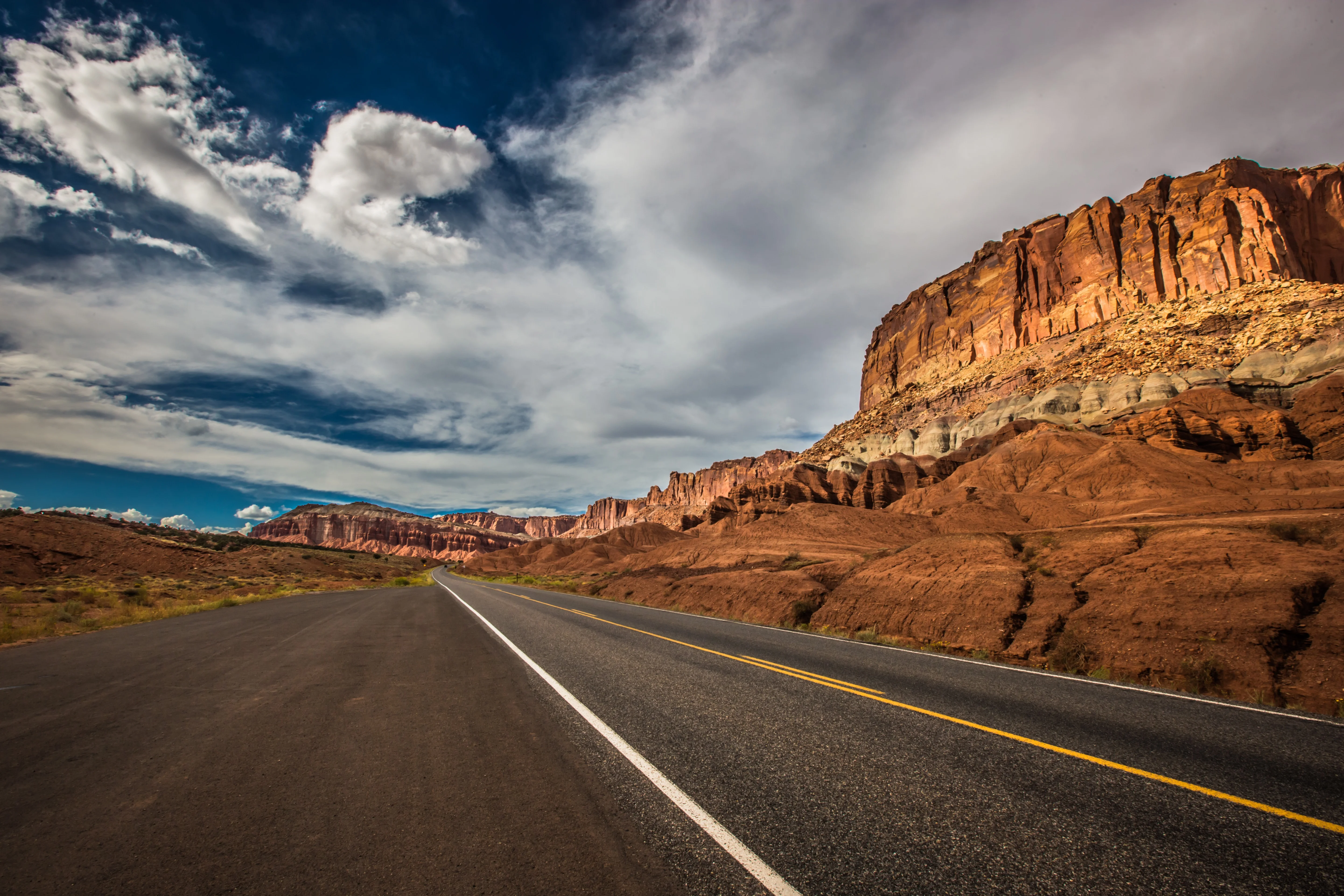
This is the day the entire itinerary has been building toward. Continue south through the Ziz Valley — a genuinely spectacular palm-lined canyon drive — with a detour to Todra Gorge, where sheer red rock walls rise nearly 300 metres above a narrow river-carved passage. No train or scheduled bus reaches the gorge floor; it exists specifically for people willing to drive there and spend an unhurried hour walking beneath the cliffs. From Todra, continue toward Merzouga and the edge of the Erg Chebbi dunes, arriving in time for sunset over the Sahara.
DAY 7Merzouga Desert Experience
Spend this day properly in the desert. Most travellers arrange a camel trek or 4×4 excursion into the dunes for a desert camp overnight — leaving your hire car safely parked at a Merzouga guesthouse. The silence of the Sahara after dark, followed by sunrise over Erg Chebbi’s dunes, is the kind of experience that anchors an entire trip’s memory.
🏙️ Days 8–10: Marrakech & Returning the Car
DAY 8Merzouga to Marrakech via the Dades Valley and Tizi n’Tichka
This is a long but extraordinary driving day — around 7–8 hours covering the Dades Valley’s dramatic rock formations, the town of Ouarzazate (Morocco’s “Hollywood,” home to the Atlas Film Studios), and finally the Tizi n’Tichka mountain pass, Morocco’s highest paved road at 2,260 metres, before descending into Marrakech. Consider breaking this into two days with an overnight in Ouarzazate or at the UNESCO-listed kasbah of Ait Benhaddou if the pace feels too ambitious for one sitting.
DAYS 9–10Marrakech — The Red City
Your final two days belong to Marrakech. Jemaa el-Fna square, the Bahia Palace, the Majorelle Gardens, and the endless souqs of the medina fill these days easily. On your final morning, arrange your car return at Marrakech Menara Airport (RAK) — the drop-off process typically takes 15–20 minutes, and the airport is a short drive from the city centre.
🛣️ Practical Driving Tips for This Route
A 10-day loop covering roughly 2,000 kilometres benefits enormously from a little preparation. Here’s what matters most for this specific itinerary.
Highway Conditions
The motorway sections of this route — Casablanca to Rabat, Rabat to Fès — are excellent: smooth, well-signposted, tolled. South of Fès, roads transition to well-maintained national routes (N and R roads) that are paved throughout but require more attentive driving, particularly through mountain sections like the Tizi n’Tichka pass. Budget more time than GPS estimates suggest for any stretch through the Atlas or Rif mountains.
Fuel Stops
- Fill up before mountain sections — stations become sparse between Midelt and Merzouga, and again on the Tizi n’Tichka pass.
- Both petrol and diesel are widely available in all towns along this route; confirm your vehicle’s fuel type at pickup.
- Carry a little extra time buffer — mountain fuel stops sometimes have queues, particularly in peak season.
Daily Driving Pace
Days 6 and 8 are the longest driving days on this itinerary. If you’d prefer a gentler pace, this 10-day route stretches comfortably to 12–14 days by adding overnight stops in Ouarzazate, Ait Benhaddou, or the Dades Valley — worth considering if you have the flexibility.
Documents for the Road
- Valid driving licence, held for at least one year.
- International Driving Permit — strongly recommended for the full duration of a multi-region trip like this.
- Passport and rental agreement, kept in the vehicle at all times for the routine police checkpoints along national routes.
- The Huren Cars 24/7 helpline number, saved before you leave Casablanca airport.
🚙 Choosing the Right Car for a 10-Day Loop
A route covering motorways, mountain passes, and pre-Saharan roads benefits from a vehicle with genuine flexibility. A compact economy car handles the Casablanca–Rabat–Fès legs comfortably, but the Tizi n’Tichka crossing and the long southern stretches reward a bit more engine capability and ground clearance.
| Vehicle Category | Best Suited To | Daily Rate (€ approx.) |
|---|---|---|
| Compact Hatchback | Solo travellers or couples prioritising fuel economy over the full route | €28 – €46 |
| Sedan / Saloon | Comfortable motorway cruising for the Casablanca–Fès legs | €42 – €70 |
| SUV / Crossover | Recommended for this full itinerary — mountain passes, gravel approaches | €58 – €95 |
| 7-Seat Minivan | Families or groups doing the full loop together | €72 – €115 |
Always choose unlimited mileage for a route of this length — the full 10-day loop covers well over 2,000 kilometres, and any per-kilometre cap will erase the savings of a lower daily rate within the first few days. Browse the full range on the Huren Cars fleet page.
⭐ Why Huren Cars for This Itinerary
A route this ambitious deserves a rental company that understands it — not just a vehicle handed over at the airport. Huren Cars is a Moroccan-based company with genuine experience supporting exactly this kind of multi-region road trip.
Huren Cars — Built for the Full Moroccan Loop
Casablanca · Rabat · Marrakech · One-way pickup/drop-off · 24/7 helpline · Unlimited mileage options
Picking up your vehicle at Casablanca airport and dropping it off at Marrakech airport is precisely the kind of one-way arrangement this itinerary is built around — and it’s one of the most common bookings Huren Cars supports. The team knows this exact loop, from the Rif mountain roads near Chefchaouen to the long southern stretch through Merzouga, and can advise on vehicle choice, timing, and route conditions before you set off.
❓ Frequently Asked Questions
The Loop Is Yours to Drive
This Morocco 10 day itinerary covers a genuinely remarkable cross-section of the country — Atlantic capital, imperial cities, the mountains of the Rif and Atlas, the dunes of the Sahara, and the sensory intensity of Marrakech. None of it requires an organised tour or a fixed group schedule. It requires a reliable car, a rough plan, and the willingness to linger where the country asks you to.
Huren Cars handles the vehicle side cleanly — pickup at Casablanca, drop-off at Marrakech, and a team that knows this exact route well enough to help you plan it properly. The rest of the ten days is entirely yours.